In short
In the eSewa vs Khalti question, money cannot go straight from one wallet to the other. For sending to another person, both publish the same price list: no charge at first, then Rs 10 per extra send. Limits differ. To move funds across, use your own bank account as the middle step.
- Direct transfer: neither wallet’s own pages describe one (checked 5 October 2026).
- Price of sending: identical on both, and Rs 10 once the daily or monthly allowance runs out.
- Sent to the wrong person: report it quickly. The reporting windows are 30 days (Khalti) and 45 days (eSewa).
Everything below is taken from the wallets’ own tariff, limit and dispute pages, read on 5 October 2026. Wallets can change these figures, so confirm in the app before a large payment.
Table of contents
Can we send money from eSewa to Khalti?
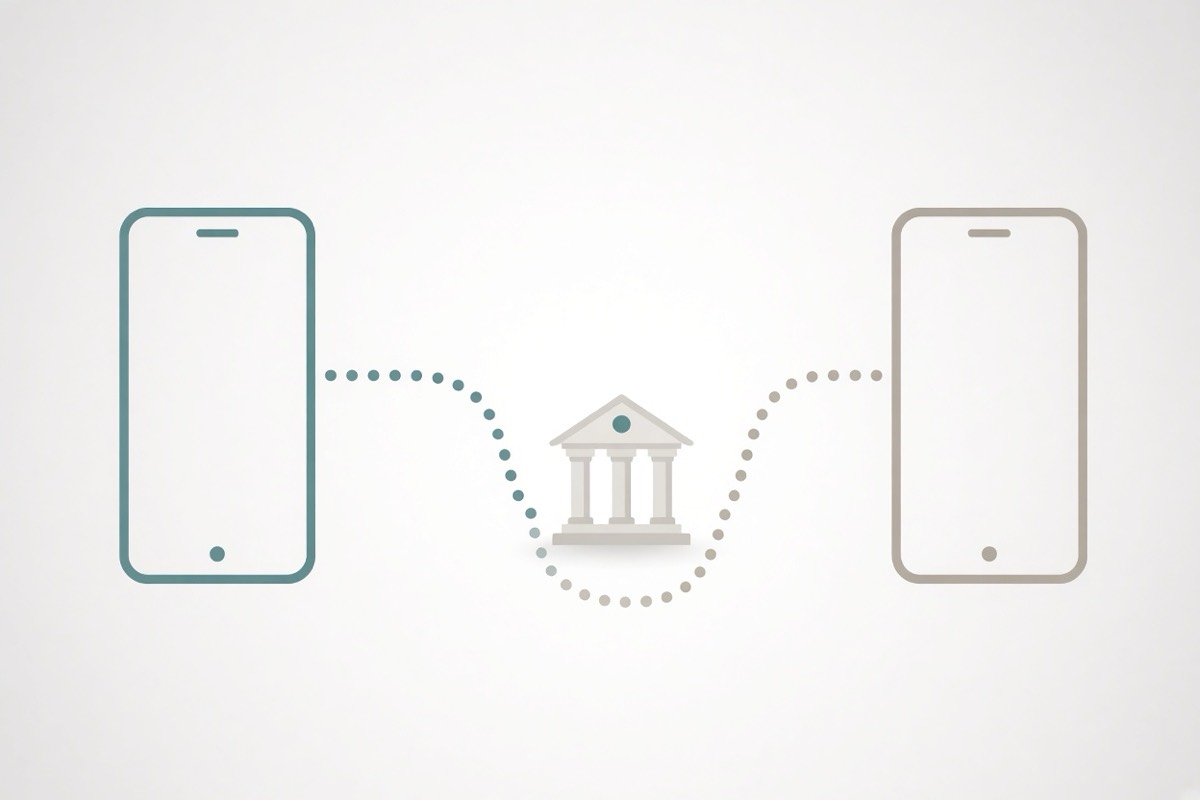
For eSewa vs Khalti transfers the answer is no, not in one step. eSewa’s help page describes Send Money as a move between two eSewa accounts and notes that both people must hold eSewa accounts. Khalti’s dispute policy describes its own flow the same way: you type the receiver’s Khalti ID, and the app then shows their name and photo for you to confirm.
No page from either wallet offers a send to the other app. In February 2022 Nepal Rastra Bank (NRB) told payment providers to make their wallets interoperable within six months, and the Kathmandu Post reported that this would allow an eSewa user to pay a Khalti user. A news report from 16 September 2026 still says the two have no direct transfer between them.
The one route that both wallets document runs through a bank account in your name.
- In eSewa, open Bank transfer and send the amount to your own linked bank account. eSewa’s tariff lists Rs 10 for any amount from Rs 100 to Rs 200,000.
- In Khalti, load it from that bank using mobile banking. Khalti lists no fee of its own for this.
Neither wallet says what your bank charges, so ask the bank. KYC (identity verification) is also needed on both wallets before wallet sends work, as explained below.
eSewa vs Khalti: what does sending money cost?
On the bank route, the only wallet charge that either page publishes is eSewa’s Rs 10. For sending to another user inside the same wallet, the two price lists say the same thing.
| Item | eSewa | Khalti |
|---|---|---|
| Send under Rs 100 | No charge | No charge |
| Send over Rs 100: first 3 a day, up to 30 a month | No charge | No charge |
| Any send past those caps | Rs 10 each | Rs 10 each |
| Add funds by card | 1.75% | 3% home card, 5% foreign card (set by the card network) |
| Pay out to a bank | Rs 10 per transfer, Rs 100 to Rs 200,000 | First 3 a month from a linked account: no charge. Rs 10 from the 4th |
A worked example from the eSewa vs Khalti tariffs: a sender making a fourth Rs 500 transfer in one day pays Rs 10 on either wallet. The pages do not say whether sends under Rs 100 count toward the three-a-day allowance, so do not assume they do not.
Sources: eSewa tariff page (stamped Bhadra 3, 2083 in the Nepali calendar) and Khalti charges page. Checked 5 October 2026. Khalti also sells a Rs 599 membership whose listed perks include unlimited Khalti-to-Khalti sends at no added cost.
How big can one transfer be?
On limits, the eSewa vs Khalti gap is mostly the per-send cap. Both wallets work under NRB rules and both require a verified (KYC) account. eSewa states that unverified users cannot make wallet-to-wallet sends at all. Khalti states that verification must come before any transaction.
| Verified user | eSewa | Khalti |
|---|---|---|
| One wallet send | Rs 25,000 | Rs 50,000 |
| One day of wallet sends | Rs 50,000 across 10 sends | Rs 50,000 |
| One month of wallet sends | Rs 500,000 across 100 sends | Rs 5 lakh |
| Balance you may hold overnight | Rs 50,000 | Rs 50,000 |
| One payout to a bank | Rs 50,000 (limits page) | Rs 2 lakh |
Sources: eSewa “Revision in Transaction Limits” and Khalti “Transaction Limits”, checked 5 October 2026. Khalti’s page refers to an NRB directive of 7 March 2025. eSewa’s page refers to an NRB directive of 19 Bhadra 2083.
The figures are not fully consistent across the pages, so use them as a guide. eSewa’s tariff page allows payouts of up to Rs 100,000 to your own linked bank account, while its limits page shows Rs 50,000. That limits page also carries a second balance figure, Rs 500,000 for verified users, next to the Rs 50,000 overnight figure. Look at the limit inside the app before moving a large sum.
What happened to IME Pay?
In the eSewa vs Khalti picture, IME Pay is no longer a separate competitor. Khalti’s site says that the two NRB-licensed providers have combined, and its footer names the company IME Khalti Ltd. The Himalayan Times reported on 19 June 2025 that NRB gave final approval and that the joint app would use the Khalti name.
Khalti’s guide of 18 July 2025 walks IME Pay users through joining their account to Khalti. Wallet balance, history and KYC details are carried over, and the old IME Pay account stops working afterwards. People who completed KYC with either service are told they need not repeat it.
IME Pay’s own fee and limit pages could not be reached for this check, so there is no separate IME Pay comparison. A holder of an old IME Pay wallet should follow the Khalti merge guide instead of looking for a transfer.
I sent money to the wrong wallet. What now?
Whichever side of the eSewa vs Khalti pair you used, move the same day and keep expectations realistic. Neither wallet promises to pull back a payment that reached the wrong person.
- Keep proof. Screenshot the transaction ID, the time, the amount and the receiver name that was displayed.
- Ask the receiver, if you know them. Khalti’s FAQ tells users who loaded a wrong account to approach that person directly for the money back.
- Report to the wallet you paid from. eSewa wants an email to csd@esewa.com.np with the transaction and the people involved, sent within 45 calendar days. Khalti wants a written complaint to dispute@khalti.com within 30 days, backed by ID and a handwritten signed letter.
- Plan for the waiting time. On eSewa you have 20 days to settle with the other party before the case can go to eSewa, which aims to decide within 30 days. Khalti says reviews take at least 20 to 25 days.
- Take it to the regulator if unhappy. Khalti directs dissatisfied users to NRB’s complaint portal, gunaso.nrb.org.np.
Know the limits of this help. Khalti’s policy says it will not take up complaints about transfers made through the sender’s own carelessness, and that a payment sent in error cannot be returned by Khalti. eSewa’s terms say it takes no liability for transfer disputes, although it will help users reach the bank or merchant. eSewa’s fraud page covers unauthorised activity and undelivered goods, and does not list mistaken transfers.
One more way to pay the wrong app: a report dated 16 September 2026 says scanning an eSewa QR code inside Khalti sends the money to Khalti. Read the confirmation screen before approving. If a stranger offers to recover your money for a fee, be wary, and use only contact details printed on the wallet’s own pages.
eSewa vs Khalti: which wallet suits what?
The published pages do not rank the two, and neither does this page. Khalti or eSewa, each fits a different need.
- Paying someone who already uses one wallet: use theirs. Since funds cannot cross directly, matching the recipient avoids the bank detour.
- Sending bigger single amounts: compare the per-send cap. Khalti’s page shows Rs 50,000 and eSewa’s shows Rs 25,000.
- Adding funds by card: compare the published rates, 1.75% on eSewa against 3% or 5% on Khalti, remembering that Khalti says the card network sets its fee.
- Paying out to a bank often: compare eSewa’s flat Rs 10 with Khalti’s three monthly payouts at no charge from a linked account.
- Holding an IME Pay wallet: the path is the Khalti merge, described above.
Plenty of people run both sides of eSewa vs Khalti. Nothing on the wallets’ pages says that is a problem, but each wallet needs its own KYC.
Does any of this relate to betting sites?
This page is about wallets, not gambling, and it does not suggest depositing anywhere. Betting is illegal in Nepal: the Ministry of Communication and Information Technology said so, pointing to the Criminal Code 2017 and the Advertisement Regulation Act (Rising Nepal, 31 March 2026).
There is one practical effect on your wallet. Khalti’s dispute policy names betting and gambling among the matters it will not hear, and eSewa says it will not take up issues linked to activity the government treats as illegal. If a betting-linked transfer goes wrong, neither wallet offers a complaint route.
18+ only. If gambling is hurting you, read our responsible gambling page. For how deposits and withdrawals work on a specific site, see our payments guide and the EVO33 withdrawal explainer. For anything else, visit Help.
Settling the eSewa vs Khalti question is a wallet decision, not a reason to deposit anywhere.
FAQ
Can we send money from eSewa to Khalti?
In eSewa vs Khalti terms, not directly, as neither wallet documents it. Route the money through your own bank: eSewa’s Rs 10 payout on one side, and a Khalti load from mobile banking with no Khalti fee on the other.
Is there a charge for eSewa to Khalti?
The published wallet cost on the bank route is Rs 10, from eSewa’s tariff page. Your bank may charge extra, and neither wallet lists that.
Which has the higher limit in eSewa vs Khalti?
For a single wallet-to-wallet send by a verified user, Khalti’s page shows Rs 50,000 and eSewa’s shows Rs 25,000. Daily and monthly caps are close, so check the app before a large payment.
Do I need KYC to send money?
Yes. eSewa blocks wallet-to-wallet sends and receipts for unverified users. Khalti asks for verification before any transaction.
What happened to IME Pay?
It joined Khalti. NRB approved the merger, per the Himalayan Times of 19 June 2025, and Khalti’s guide explains how an IME Pay account is carried over.
Can I get the money back if I picked the wrong person?
Maybe, but neither wallet guarantees it. Ask the receiver, report within 30 days (Khalti) or 45 days (eSewa), and use NRB’s portal if the answer is unsatisfactory.
Sources
All sources were read on 5 October 2026. Wallet pages can change without notice.
- eSewa, Revision in Transaction Limits: blog.esewa.com.np/revision-in-transaction-limits. Checked 5 October 2026.
- eSewa, Tariffs and Service Charges: blog.esewa.com.np/esewa-tariffs. Checked 5 October 2026.
- eSewa, Frequently Asked Questions: blog.esewa.com.np/frequently-asked-questions. Checked 5 October 2026.
- eSewa, Report Dispute, Fraud and Misuse: blog.esewa.com.np/report-fraud-and-misuse. Checked 5 October 2026.
- eSewa, Terms and Conditions: blog.esewa.com.np/terms-and-conditions. Checked 5 October 2026.
- Khalti, Transaction Limits: khalti.com/info/transaction-limits/. Checked 5 October 2026.
- Khalti, Service Charges and Tariffs: khalti.com/info/charges/. Checked 5 October 2026.
- Khalti, Dispute Policy: khalti.com/info/disputepolicy/. Checked 5 October 2026.
- Khalti, Frequently Asked Questions: khalti.com/info/support/how-to/. Checked 5 October 2026.
- Khalti, Load Fund FAQ: khalti.com/info/support/load-fund/. Checked 5 October 2026.
- Khalti, Merger page: khalti.com. Checked 5 October 2026.
- Khalti, Migrate your IME Pay account (18 July 2025): blog.khalti.com/new-app/migrate-ime-pay-to-khalti/. Checked 5 October 2026.
- Nepal Rastra Bank, complaint portal: gunaso.nrb.org.np. Checked 5 October 2026.
- The Himalayan Times, IME Pay, Khalti merger gets final approval (19 June 2025): thehimalayantimes.com. Checked 5 October 2026.
- The Kathmandu Post, Central bank enforces interoperability (9 February 2022): kathmandupost.com. Checked 5 October 2026.
- Bajarko Chirfar, Khalti and eSewa QR scan confusion (16 September 2026): eng.bajarkochirfar.com. Checked 5 October 2026.
- Rising Nepal, betting ban statement (31 March 2026): risingnepaldaily.com/news/77981. Checked 5 October 2026.
This is an independent information site. We cannot access your account, we never ask for a password or a one-time code, and this page contains no affiliate or registration links.